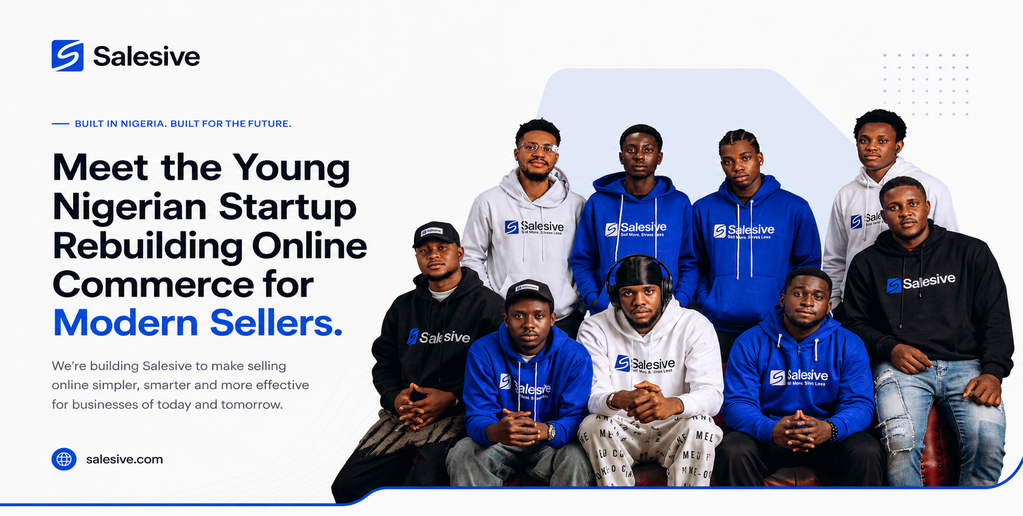
There's something you notice immediately when you spend time with the people building Salesive. They don't talk about their users in the third person. They say "us" and "we" and "people like us." That's not a communications strategy. It's just true.
The team behind Salesive is young, Nigerian, and deeply embedded in the same economic reality as the sellers they're building for. The average age on the product team is somewhere in the mid-twenties. Several of them have run their own small businesses, or watched parents do it. They've collected payments through bank transfer screenshots and chased up deliveries through informal courier channels. They've felt the friction, personally, that Salesive exists to remove.
Why Youth Is an Advantage Here
In most tech companies, product decisions get filtered through layers of management, market research reports, and user personas built by people who've never actually stood in a Lagos market. At Salesive, the product decision-maker often is the user persona. That proximity changes everything about how the team prioritizes features, designs flows, and responds when something isn't working.
When the team was designing the account signup experience, for instance, they weren't referencing best practices from a UX playbook. They were thinking about their own experience trying to register for platforms that timed out, required documents they didn't have, or sent verification codes to numbers the form wouldn't accept. That's how Salesive ended up with a signup flow that supports referral codes, adapts to staff invitation contexts, validates phone numbers properly for Nigerian formats, and makes the password requirements clear upfront rather than surfacing them as errors mid-form.
Every friction point we remove is something we experienced ourselves. We're not guessing what's annoying. We know.
Smarter Solutions Come From Real Constraints
One of the core principles the team operates by is that constraints are creative. Nigerian internet is unreliable. Devices are often entry-level. Data is expensive. Rather than treating these as problems to apologise for, Salesive treats them as design requirements.
The store setup flow was built to be resumable specifically because the team knew sellers might get interrupted mid-session by a power cut, a customer at the door, or a weak signal. Progress saves automatically at every step. A seller who starts setting up their store on Monday morning and gets called away can pick up exactly where they left off on Tuesday afternoon without losing a thing.
The OTP verification experience got the same treatment. The team noticed that people often copy verification codes from SMS on a different screen or from another app. So paste support was built in from the start, and the resend timer was set to a length that reflects actual SMS delivery times in Nigeria, not the optimistic defaults baked into international templates.
Building for Sellers Who Live on Instagram
A huge proportion of Nigerian sellers built their audience and their customer base on Instagram before they ever thought about having a standalone store. That's just the reality of how commerce grew here. Most tools designed for e-commerce treat Instagram as an afterthought, a marketing channel you bolt on after the fact. Salesive inverts that.
During store setup, sellers are prompted to import from Instagram directly. The brand identity, the product catalogue, the visual aesthetic that a seller spent months building on social media can carry over into their Salesive store rather than starting from a blank page. For a seller with two years of Instagram content and a loyal following, that's not a minor convenience. It's the difference between feeling like the store is an extension of the business they've already built and feeling like they're starting over.
A lot of our sellers already have businesses. They already have customers, reputation, and a brand. We're giving them infrastructure that matches what they've already built, not asking them to rebuild.
AI Built for African Context
The Salesive team has been thoughtful about where AI earns its place in the product. Not everything needs to be automated. But there are specific moments in the seller journey where the right AI assist removes a real barrier.
Domain naming is one of those moments. Most sellers aren't branding experts and staring at a blank text field asking for a store domain is more paralysing than helpful. When a seller types in a description of their brand during setup, Salesive's AI reads it and surfaces available domain suggestions that actually match the tone and style of the brand. A skincare seller describing a clean, premium feel gets domain suggestions that reflect that. A food vendor going for a warm, homey identity gets something different. It's a small moment but it removes what is for many sellers a surprisingly large sticking point.
Logo generation works on the same principle. Many sellers, especially those just moving from a WhatsApp-only setup, don't have a logo. A professional designer is outside the budget. The AI logo generator in setup gives them real options to choose from without needing to leave the platform or spend money they don't have yet.
What It Means to Build With Empathy
Empathy in product development is easy to claim and hard to practise. The Salesive team earns the word through proximity. They onboard sellers themselves. They sit in on support calls. When a new seller gets stuck somewhere in the setup flow, someone on the product team finds out about it the same day.
That feedback loop is why the platform improves quickly and in the right directions. Not because the team follows a framework, but because they genuinely care about the outcome for each seller that comes through the door. When a seller in Kano goes from zero to live in an afternoon, or a Lagos boutique crosses its first million naira month, those aren't just metrics. They're the actual point.
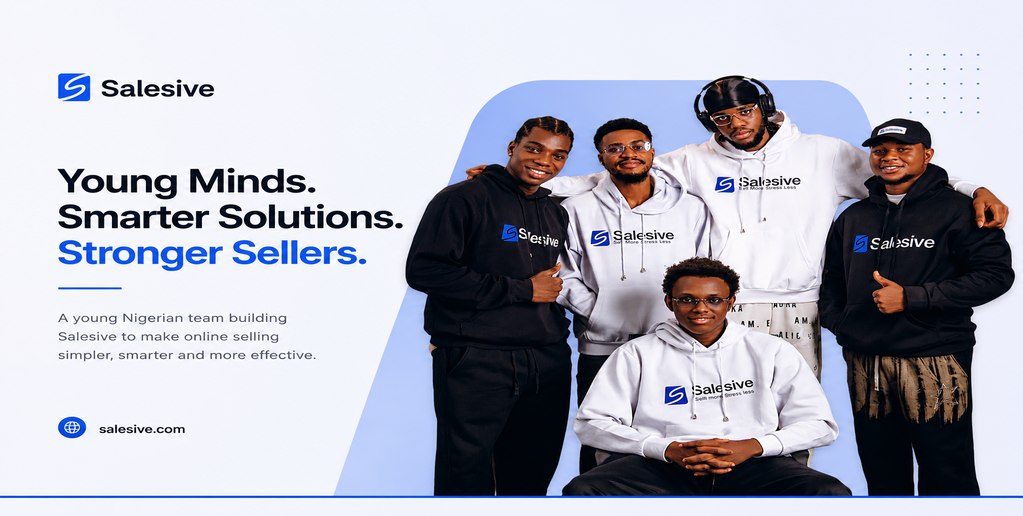
The tagline is Young Minds. Smarter Solutions. Stronger Sellers. That's not just something that sounds good on a banner. It's a genuine description of how this team operates, what they believe about building technology in Africa, and what they're trying to create for every seller who trusts them with their business.